Not a Veteran’s Story Alone
— The Tug of War Is Not a Veteran’s Story Alone
When I wrote The Tug of War, I thought I was speaking to fellow veterans—my brothers in the mud, the noise, the long ache of coming home. But the deeper I went into the marrow of the story, the more I saw what was hiding under the floorboards: the book isn’t only about men who went to war. It’s about the nation that sent them, the families that received them, the children who grew up next to the quiet tremor in their fathers' hands, and the culture that has spent fifty years pretending the past is over simply because the calendar turned.
There is a microcosm and a macrocosm to every war.
In the small world—inside the rib cage—the war becomes an echo chamber. Every man carries his own private shrapnel. In the larger world—our towns, our politics, our present-day mistrust of everything from government to neighbors—the war still hums like an old transformer that no one bothered to shut off.
What happened in Vietnam didn’t stay in Vietnam. It came home, slept in our beds, raised our children, shaped our television, and taught our leaders lessons they never clearly admitted to learning. It seeped into the national bloodstream. And I sometimes think of PTSD as a viral illness—not in the medical sense, but in the way suffering spreads. Trauma never stays put; it radiates. It travels across living rooms, across silence, across generations. You don’t have to carry a rifle to carry the residue.
That’s why I’m shifting the focus of my work. This book is not a private conversation among veterans. It is an invitation to the civilians who may have forgotten or were too young to notice how that war bent the arc of everything that followed. There is no “over there” and “here.” There is only us.
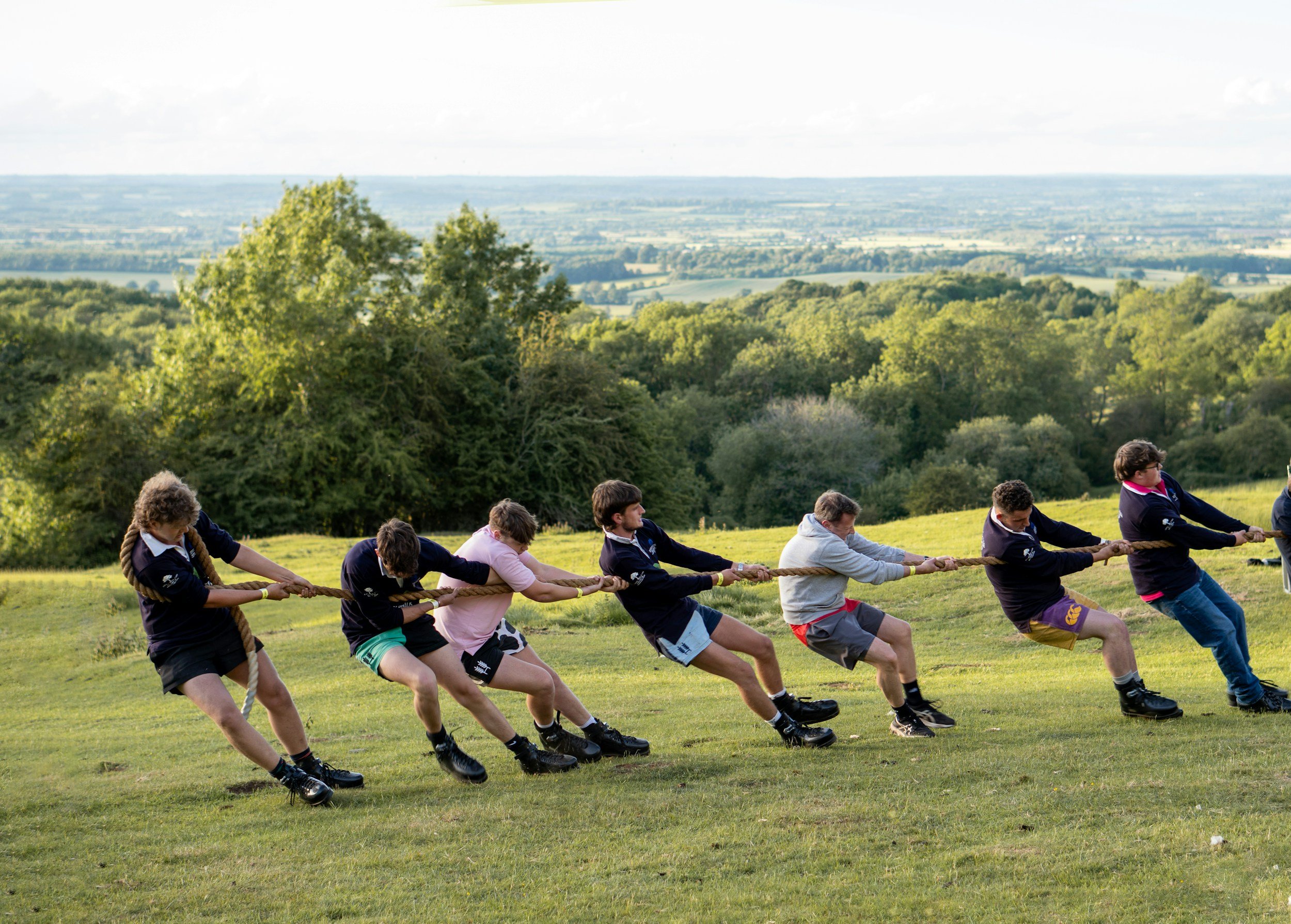
So let me ask the simplest question, the one that reveals the truth every time:
Who among you is a veteran?
Who is related to a veteran?
Who knows a veteran?
When you answer honestly, the circle of impact widens until nearly everyone is inside it. That is the point. That is the awakening.
Vietnam changed the men who fought, but it also changed the nation that asked them to. And the echo of that choice is still shaping our present—the politics we distrust, the wars we drift into, the way our culture absorbs violence like it’s background noise.
My hope is that The Tug of War awakens something not just in the ones who survived the jungle, but in the ones who inherited its smoke without ever setting foot on its soil. Because if we don’t understand what the war did to all of us, we remain stuck in its shadow.
As James Baldwin wrote, “People are trapped in history, and history is trapped in them.”
I want this book to be a light in that trap.